Mariposa: luxury retreats in historic gold country
A casual valley escape thrives on quiet backroads. While the towering granite walls and tight canyon loops of the high mountains draw heavy seasonal tourist traffic, the rolling oak foothills of Mariposa County offer a completely different, grounded rhythm. Highway 140 cuts directly through a sunny, low-elevation terrain defined by historic timber barns, stone-walled mining ruins, and fields of wild chaparral. This distinct foothill corridor serves as a highly functional, relaxed basecamp where the winter weather remains mild and the local streets retain an authentic, small-town pace. This guide provides exact, stress-free logistical instructions to navigate the historic mining county through independent architectural properties, regional dining, and authentic local history.
Redefining luxury along the western slope
The concept of a luxury travel experience along these historic corridors shifts away from the traditional definitions found in coastal resorts or urban centers. Premium hospitality here does not manifest as white-glove service, marble lobbies, or high-density gated compounds. Instead, the focus settles entirely on spatial independence, architectural integration, and the preservation of historic character. Wealth in this landscape means having immediate, uncomplicated access to open space and clean mountain air without the noise of massive commercial tourist infrastructures. It is a functional style of comfort designed for travelers who value architectural transparency, low-density environments, and an authentic connection to the surrounding geography.
This regional style of luxury prioritizes specialized, high-end engineering that allows custom-built accommodations to exist comfortably within a rugged environment. Premium lodgings leverage custom climate control grids, thermal insulation layers, and high-design interior finishes to provide exceptional comfort while minimizing the physical footprint on the local watershed. Dining experiences rely on the strict technical execution of classic culinary methods, using fresh ingredients sourced from independent family farmsteads rather than corporate global supply chains. By focusing on site-specific design, authentic materials, and local heritage, these properties deliver a grounded, premium sanctuary that allows guests to experience the gold country on a deeply personal, human scale.
Modern, eco-conscious airstreams along the foothills
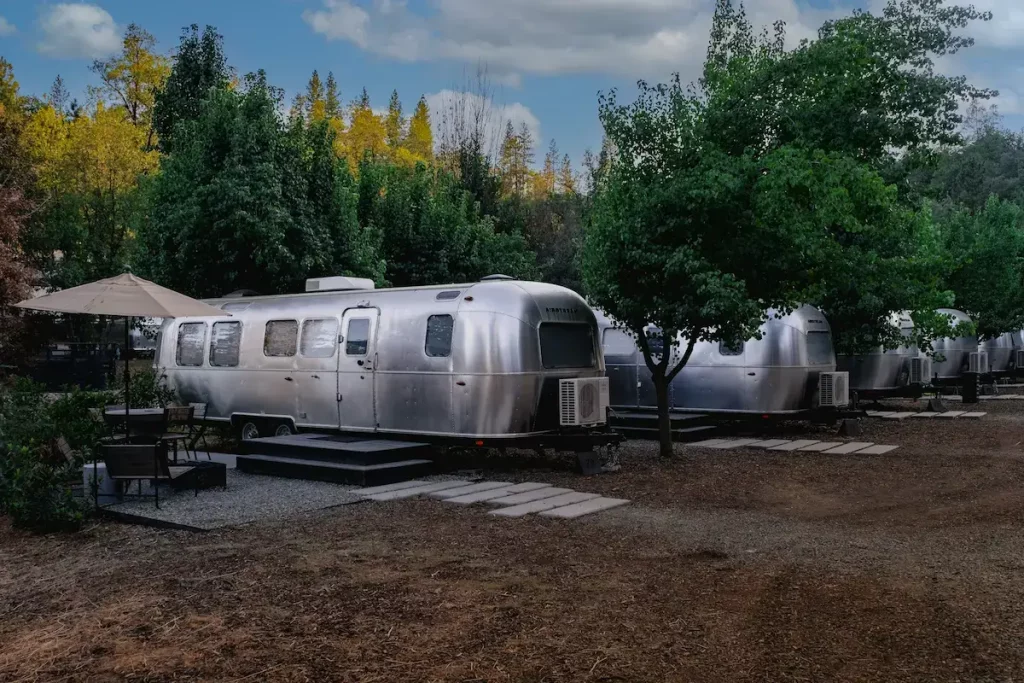
This modern property sits inside a private, tree-lined foothill valley bordering a quiet stretch of the local highway corridor. The resort operates on an outdoor luxury hospitality format, requiring an online reservation code to book custom, mid-century style aluminum airstreams or private pine cabins. Rates vary by season but generally run between three hundred and five hundred dollars per night, featuring full access to a centralized architectural clubhouse, an outdoor heated pool, and complimentary cruiser bicycles. The atmosphere is open and community-focused, structured with private fire pits and outdoor lounge seating that allow guests to relax beneath the pines completely free of crowded resort hotel lobbies.
The underlying estate layout prioritizes low-impact landscape architecture, blending modern steel-and-wood pavilions seamlessly into the native white oak canopy. The custom-designed airstream trailers feature high-end technical design elements, including spa-inspired walk-in showers, full electricity grids, and massive panoramic windows that pull the natural hillside light directly into the living space. The property utilizes strict greywater filtration and energy-conscious solar grids to minimize its overall footprint on the local watershed. Choosing this valley basecamp gives a highly functional look at contemporary sustainable design, allowing travelers to breathe the mountain air without sacrificing premium structural comfort.
Minimalist ridge cabins and modern canvas tents
Nights are spent on a steep, sun-drenched ridge overlooking the vast Mariposa foothills inside an expansive glamping and cabin compound. The property operates as an eco-conscious luxury retreat, offering extra-large canvas safari tents and light-filled architectural cabins that can be booked directly through their web portal. Tents start around one hundred and eighty dollars per night, utilizing a clean, modern central bathhouse, while the independent cabins feature private indoor bathrooms and fully equipped kitchens. The layout is distinctly quiet and spread out, designed with private cedar viewing decks and gas fire pits that face westward to catch the unobstructed mountain sunsets.
The structures are built with an emphasis on sustainable thermal design, utilizing heated mattress pads and specialized insulation layers to keep the interiors comfortable during sharp desert-mountain temperature drops. The land management program leaves the native chaparral and manzanita brush entirely intact between the plots, creating natural wildlife corridors that host local deer and hawk populations. The owners enforce strict dark-sky lighting guidelines across the entire ridge, eliminating ground-level glare to ensure clear, unbothered stargazing from private patios. This high-desert setup delivers a realistic, raw look at the Sierra foothills, showing how high-end minimalist structures can coexist with an arid landscape.
Boutique historic suites at Tourist Homes
The lodging experience here is situated directly in the heart of the historic downtown district, allowing guests to walk to local coffee roasters and artisan shops without moving a car. The property functions as a boutique collection of restored vintage suites and bungalows, which can be booked individually for around two hundred dollars per night depending on the season. The vibe is distinctly private and residential, offering a “Boho” aesthetic that feels more like staying in a well-curated friend’s apartment than checking into a standard highway motel.
Originally built in 1938 to house workers and travelers passing through the gold country, the structures have been meticulously renovated to preserve their era-specific charm while upgrading the internal systems. The interiors feature original hardwood floors, period-correct architectural details, and full kitchenettes that allow for self-sufficient, long-term stays. By preserving the existing downtown footprint rather than building new, the property maintains the authentic, low-density character of the main street while providing a design-forward basecamp for exploring the surrounding region.
Upscale American dining at Charles Street Dinner House
Dining takes place inside a restored historic home from the nineteenth century, creating an atmosphere that feels less like a commercial restaurant and more like a private dinner party. Reservations are essential, especially on weekends, as the intimate dining room fills quickly with locals and travelers seeking a quiet evening meal. The dress code is relaxed but the service is polished, offering a structured menu that moves at an unhurried pace suitable for a full evening commitment rather than a quick roadside stop.
The kitchen focuses on upscale American classics prepared with a level of technical precision rare for the region, sourcing produce from the surrounding agricultural valleys. The menu highlights hand-cut steaks and fresh seafood flown in daily, avoiding the heavy, processed shortcuts often found in tourist corridors. The setting leans into its gold-rush heritage with subtle, dark wood accents and warm lighting, providing a grounded, authentic backdrop for a premium meal. It stands as a culinary anchor in Mariposa, proving that high-quality execution thrives just as well in the foothills as it does in the city.
Mariposa Museum & History Center
This cultural stop sits just off the main highway, offering a dense, highly curated look at the region’s mining and agricultural past without the polished gloss of a major theme park. Admission is modest, and visitors can explore the grounds at their own pace, walking through original buildings that have been relocated and preserved on-site. The environment is quiet and educational, typically staffed by long-time local volunteers who provide direct, unscripted insights into the realities of life in the 1850s.
The collection is widely regarded as one of the most authentic representations of the Gold Rush era in California, featuring a fully operational stamp mill that demonstrates the brutal mechanics of ore crushing. Unlike sanitized tourist displays, the exhibits here showcase the raw, industrial tools and personal artifacts of the miners, ranchers, and Native American tribes who shaped the landscape. The museum prioritizes historical accuracy and preservation, offering a transparent view of the economic and physical forces that built the town. Spending an hour here grounds the entire trip, connecting the modern landscape back to its rugged, labor-intensive origins.
Navigating the foothills route

Driving through the lower Mariposa loop allows for exploration of the local geography at a highly functional, continuous pace. The low-elevation route links directly to rural county roads that connect multiple historic town centers and agricultural valleys without duplicating the route. Planning an arrival for the early afternoon ensures a completely clear drive past the oak hillsides and an easy transition back to the main highways.